Universal truths, ancient wisdom
"Enemy Slayer: A Navajo Oratorio" reveals deep meaning of creation story
By Marley Shebala
Navajo Times
 E-mail this story
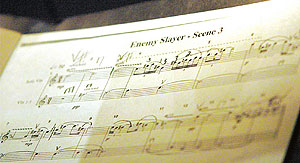
(Special to the Times - Leigh T. Jimmie)
A sheet of music from scene three shows music of the "Enemy Slayer: A Navajo Oratorio."
"I smoked myself in the mad smoke of war. Mothers' hopes wrapped in bloodied rags."
In such words was the nightmare of war, modern and ancient, brought to life in "Enemy Slayer: A Navajo Oratorio," which premiered Feb. 7 as the centerpiece of the Phoenix Symphony's 60th anniversary.
"Enemy Slayer" casts the story of a battle-fatigued Navajo warrior returning from Iraq in epic terms, inspired by - but not violating - the sacred 'Anaa'jí (Enemy Way) ceremony.
The first-ever oratorio to be based on an indigenous creation story, rather than the Bible, "Enemy Slayer" was performed before sold-out audiences Feb. 7 and 9, winning a 10-minute standing ovation after its premiere.
The performances marked the culmination of nearly two years of work by composer Mark Grey, who recruited award-winning Navajo poet Laura Tohe to write the lyrics, or libretto, that give shape to his visionary concept.
The 70-minute piece featured a chorus of 140 singers, a full symphony orchestra, baritone soloist Scott Hendricks, and the Southwest landscape photography of Deborah O'Grady projected on a 12-by-21 foot screen.
The result was an experience so moving that some audience members shed tears, and no one was left untouched by its depth of meaning.
Navajo history is one of surviving dangerous times and powerful enemies, beginning with the story of heroic twin brothers who defeated the monsters that inhabited Dinétah, the Navajo homeland.
The twins, Monster Slayer and Child of Water, won that battle only to face a new one when they returned home: a vast inner torment that emptied their lives of happiness.
Nightmares, hopelessness and emotional numbness separated them from their loved ones. Instead of glory, they felt fear, anxiety, and the need to be alone. They thought of suicide.
The Diné loved and admired the hero twins so they beseeched the Holy Ones to heal them. In response, the Holy Ones created the 'Anaa'jí, now one of the most widely practiced ceremonies of the people.