



At Zuni meeting, parents and advocates call for education reforms promised under Yazzie/Martinez
Special to the Times | Donovan Quintero
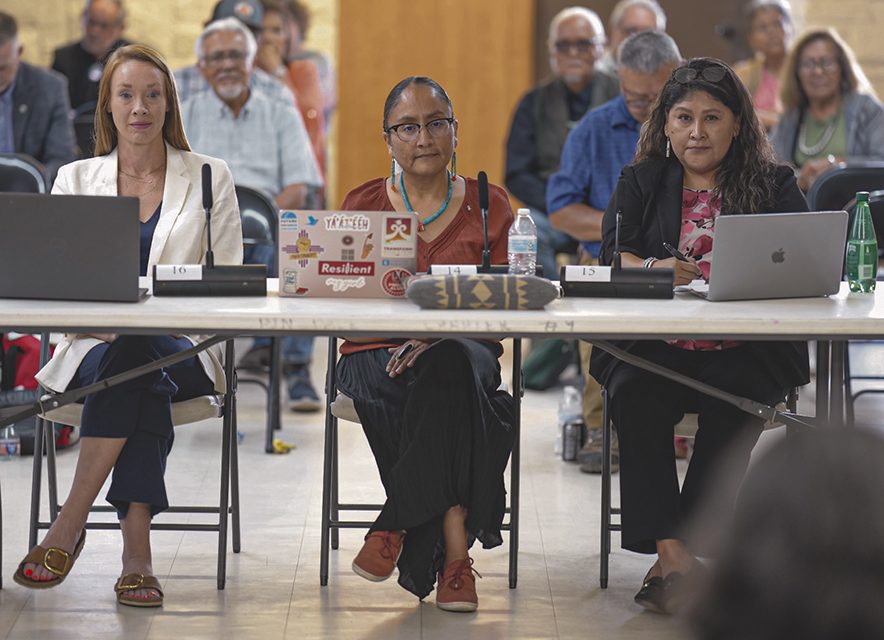
Wilhelmina Yazzie, a plaintiff in the landmark Yazzie-Martinez lawsuit against the state of New Mexico, sits with fellow advocates during a public meeting on July 17, 2025. The case determined that the state’s Public Education Department failed to adequately support students from low-income families, Native American students, English language learners, and students with disabilities.
ZUNI, N.M.
At the Zuni Wellness Center, families, educators, advocates, and community members gathered on Aug. 14 for one of the regional meetings ordered by the court to address the Yazzie/Martinez ruling.
The meeting was part of a statewide series designed to collect public input that will shape a new education plan for New Mexico, a plan meant to comply with the 2018 court decision that found the state had failed to provide sufficient and equitable education for all students.
Voices of concern
Wilhelmina Yazzie, a lead plaintiff in the case, said she is still hearing many of the same concerns she first raised nearly a decade ago.
Special to the Times | Donovan Quintero
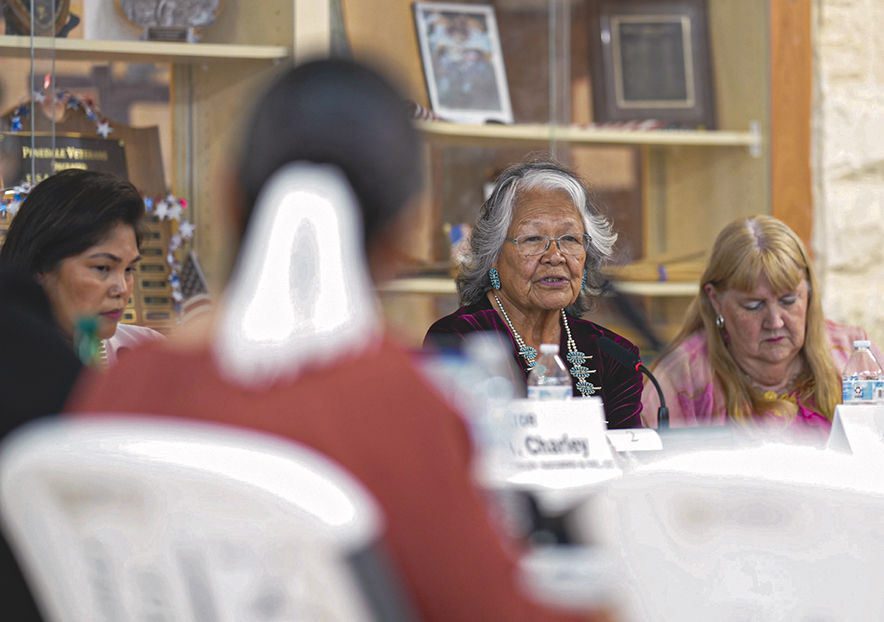
New Mexico Rep. Martha Garcia, who represents Cibola and McKinley counties, speaks during a meeting on July 17. Garcia participated in discussions related to the Yazzie/Martinez ruling.
“I’m very glad that she was able just to be out there, truthful, outspoken,” Yazzie said of another parent who shared her child’s struggles during the meeting. “And I think we really need parents to come out like that, but then there’s that little barrier of retaliation. A lot of parents I talked to (asked me to relay their message instead of attending).”
The day before, Yazzie gathered feedback from students at Six Directions Indigenous School in Gallup. Sixth through twelfth graders described bullying, overcrowded classrooms, disrespect from staff, and a lack of cultural or language instruction. Several said English learners were labeled and isolated, while others said services for students with disabilities often disappeared. They also pointed to limited access to technology, restrictive rules, and few opportunities for hands-on, culturally relevant learning.
For Yazzie, those testimonies echoed her own experience as a mother.
“That was a lot of memories that brought back, because those were the same things that I encountered, especially when my oldest son was in third grade,” she said. “(At) his parent-teacher conference, they told me, ‘Your son is below the percentile where he should be.’ And I asked, how do we help him? It seemed like they presented only the negativity … but didn’t show us how to help our children.”
To read the full article, please see the Aug. 21, 2025, edition of the Navajo Times.
Get instant access to this story by purchasing one of our many e-edition subscriptions HERE at our Navajo Times Store.

 Highway 264,
 I-40, WB @ Winslow