







Drought forces feral horse removal in Bitter Springs
Navajo Times | Krista Allen
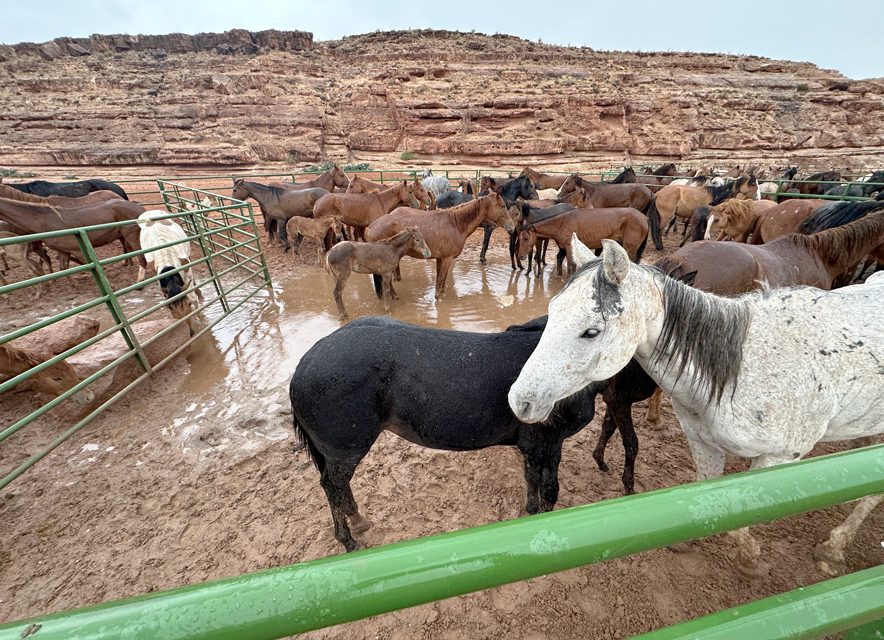
Feral horses stand in a pen at the Bitter Springs Windmill on Aug. 15 during an entrapment. With nearby watering points dry, dozens of horses were gathered and later transported to the livestock impound in Tse Bonito, N.M.

BITTER SPRINGS, Ariz.
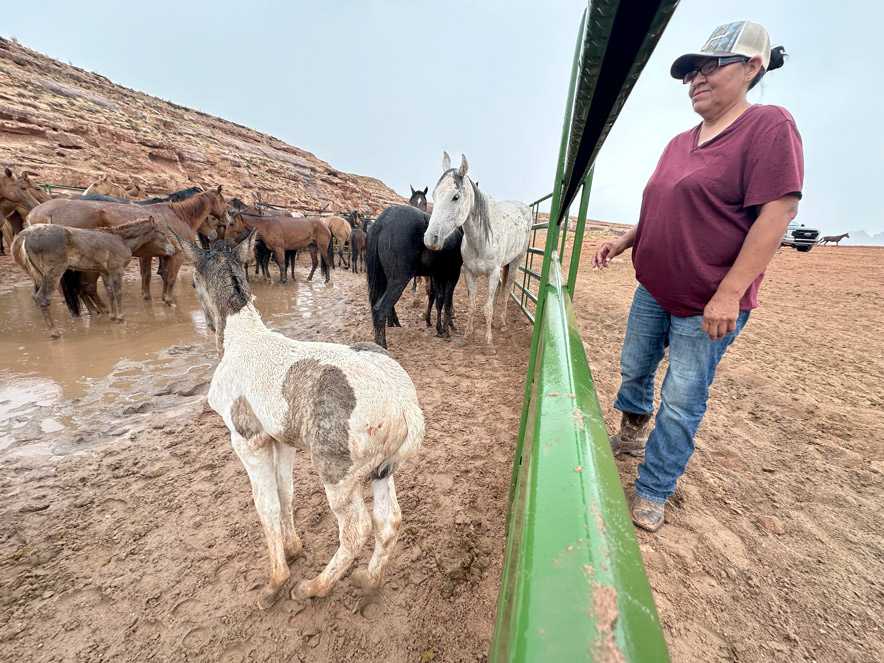
Diné rancher Darlene Strong stood in the rain at the Bitter Springs Windmill, tending to a week-old foal separated from its mother during an entrapment of dozens of feral horses.
The foal’s care unfolded against the backdrop of a decades-long water crisis and a herd population estimated at more than half a million. Strong brushed the rain off the foal inside a pen where it had spent the night with other feral horses. The foal was among dozens of horses loaded into trailers Thursday for transport to the Navajo Nation Rangers’ livestock impound in Tse Bonito, New Mexico. Strong, who helped with the entrapment, said she wished she could take them all home.
Navajo Times | Krista Allen
Diné rancher Darlene Strong stands at the Bitter Springs Windmill on Aug. 15 with a week-old foal and dozens of feral horses penned during an entrapment in Bitter Springs, Ariz. The foal had been separated from its mother.
“I wish I could keep them,” she said, stroking the foal’s damp coat and speaking to it gently. “I’m a horse person. If I had money, I would keep them all.”
Strong said the windmill at Bitter Springs hasn’t been working, leaving no water for livestock. “The windmill (here) is always out and there’s no water for them,” she said, adding that she and her husband, Randy Turquoise, haul water for their cattle every weekend. “It’s drought.”
A region in extreme drought
Northern Arizona continues to face extreme drought. The U.S. Drought Monitor reports large portions of central and northern counties are in extreme (D3) to severe (D2) drought, with most of the region in moderate to extreme dry conditions. Statewide, 97 percent of Arizona remains in drought, ranging from moderate to worst-on-record severity.
In the Navajo Nation, drought has persisted for decades. The U.S. Southwest has been in a long-term drought since 1999 – a trend expected to continue, according to the Navajo Nation Department of Water Resources. As of mid-2025, the Nation faces increasingly frequent drought emergencies that strain already limited water supplies.
Navajo Times | Krista Allen
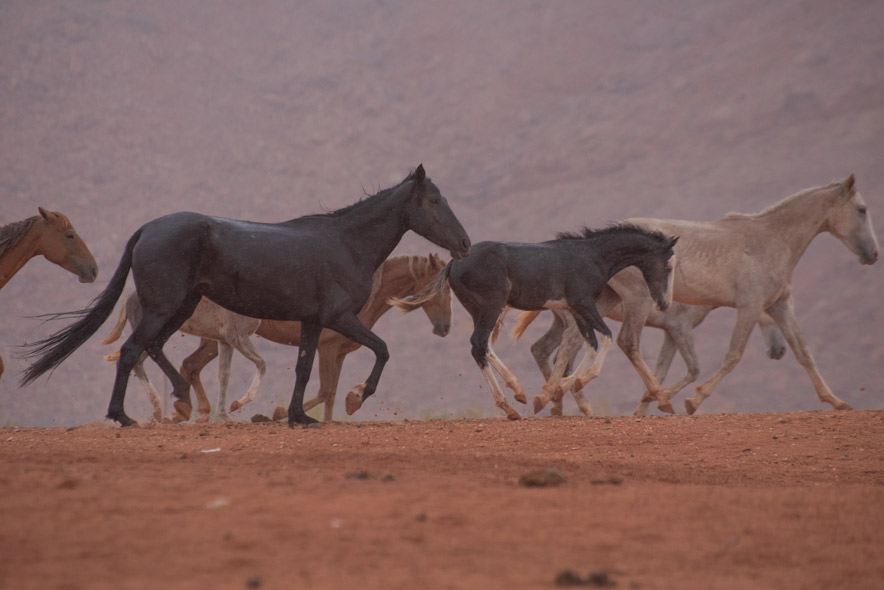
Feral horses run across the land near Bitter Springs, Ariz., during an entrapment on Aug. 15. Drought and dry windmills in the area have left little water for livestock.
In 2018, 191 wild horses died at a dried stock pond in Gray Mountain, Arizona. Weakened by drought, the animals crowded into the muddy basin in search of water but became trapped and too weak to escape. The deaths brought national attention to the combined impacts of feral horse overpopulation and drought, and to the urgent need for sustainable water access for both domestic and wild animals.
That history weighed on some residents as they worked to corral and load dozens of feral horses in Bitter Springs.
Local concerns over horse ownership
While some horses bear brands, Strong said owners often neglect them, stepping forward only during chapter-requested roundups and entrapments – and then letting the animals roam free again. “They (owners) take them and the next day they’ll be running around out here,” she said. “That’s why we reported it and hopefully they’ll go to a good home. They’re mustangs.”
“No more cowboys,” Turquoise said.
“It’s a dying breed,” Strong added.
The Navajo Nation Division of Agriculture estimates more than 500,000 wild horses roam the Navajo Nation. Bodaway-Gap, with one of the largest grazing areas in Western Navajo, has dozens among its herds, said chapter grazing officer Lee Yazzie Jr.
“It needs to be done,” Yazzie said. “It’s overdue.”
Yazzie said he has checked the area’s windmills every weekend for the past three weeks. On Aug. 9, he saw older residents digging trenches in Tanner Wash for the livestock after a nearby watering point ran dry.
Coordinated response
Navajo Times | Krista Allen
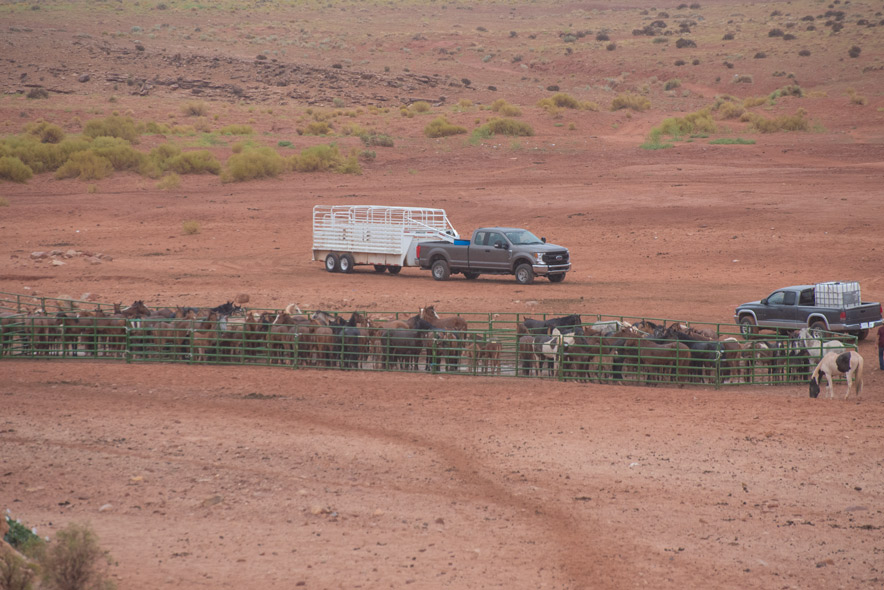
Dozens of feral horses are penned near the Bitter Springs Windmill on Aug. 15 before being loaded into trailers for transport to the livestock impound in Tse Bonito, N.M. The entrapment took place amid ongoing drought and scarce water sources in Bitter Springs, Ariz.
Overwhelmed, he called Delegate Helena Nez Begay, who toured the area with her legislative district assistant Aug. 10 and worked with agriculture manager Jesse Jim to arrange the entrapment.
Begay said she and her assistant counted around 50 foals and more than 200 horses. “They (horses) were thirsty, there was no water,” Begay said in Navajo. “They were trying to hit the spring water. There was nothing but mud.”
Begay, who represents LeChee, Coppermine, Bodaway-Gap, Tonalea-Red Lake and Kaibeto, immediately called Jim asking for emergency help. By Wednesday, Aug. 13, Jim and her team delivered horse panels for a pen. At least two trailers of horses were sent to the impound on Thursday. Four more trailers were taken Aug. 15.
“We rounded up a pretty good number,” Begay said. “There was a lot of horses.”
Begay said the Bitter Springs Windmill would be fixed.
Yazzie thanked community members who helped during the multi-day effort. The Bodaway-Gap Chapter had approved a resolution in April 2025 to address the feral horse problem here.
“Horses are part of our Navajo culture,” Yazzie said. “Horses have meaning. I want to do things the correct way. I do care for them, and I love them. This drought has been impacting us – we don’t have enough rain. I want what’s best for my community.”
Get instant access to this story by purchasing one of our many e-edition subscriptions HERE at our Navajo Times Store.

 Highway 264,
 I-40, WB @ Winslow