



Former President Nez urges self-reliance as shutdown cuts off food benefits
WINDOW ROCK
With the federal government shutdown freezing Supplemental Nutrition Assistance Program benefits for November, Arizona and New Mexico scrambled to deploy emergency aid while Utah warned that it could not issue November payments.
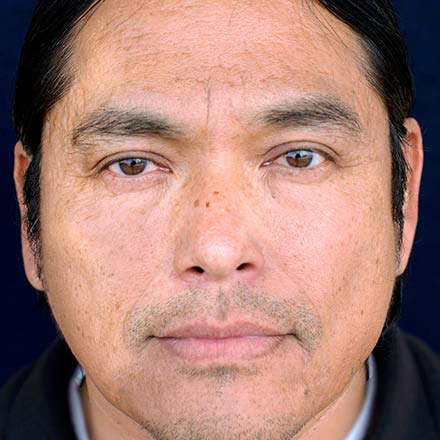
In the Navajo Nation, tribal officials urged families to conserve what they have and prepare for shortages, as former President Jonathan Nez called for renewed focus on food sovereignty and community self-reliance.
“In terms of SNAP, the state of Arizona and the state of New Mexico are utilizing their own dollars to help,” Nez said. “But of course, that’s a federal government program, and we’re hoping that the federal government, our leaders, will come together and reopen so that people can get back to helping their families and the people. A lot of direct services are being impacted right now with the government shutdown.”
States scramble to fill the gap
In Arizona, the Department of Economic Security confirmed that approved SNAP participants will not be able to collect November benefits until Congress restores federal funding. Gov. Katie Hobbs announced $1.8 million in American Rescue Plan funds to provide limited relief, including $1.5 million for food banks and $300,000 for “Food Bucks Now,” a rapid-response voucher program offering $30 credits for fresh produce through the Double Up Arizona network of farmers markets and community groceries. Hobbs called the measure “much-needed relief,” though she noted it “falls short of the $150 million in food assistance the federal government delivers to Arizonans every month.”
The Arizona Secretary of State’s Office and Local First Arizona launched “AZ SNAP Support,” a new directory of restaurants, grocers and small businesses offering discounted meals and pay-it-forward programs for families missing their November benefits. Nearly 900,000 Arizonans depend on SNAP each month, showing the scale of the crisis.
New Mexico is taking a different approach by loading state funds directly onto EBT cards. Gov. Michelle Lujan Grisham announced that $30 million in state food benefits would be deposited Nov. 1 to assist up to 460,000 residents, covering roughly the first 10 days of the month. The funds, administered by the New Mexico Health Care Authority, are separate from SNAP and designed as a temporary bridge while USDA funds remain frozen. The agency continues to accept new applications through the YesNM portal and directs families to emergency food and tribal distribution programs.
Utah’s Department of Workforce Services stated that it will not issue SNAP payments for November and will provide updates through its jobs.utah.gov website.
On Oct. 27, the Navajo Nation Division for Children and Family Services released a public service announcement confirming that the U.S. Department of Agriculture will not issue SNAP benefits beginning Nov. 1 because of the shutdown. NDCFS urged recipients with remaining balances to buy nonperishable foods and to reach out for assistance through local programs.
“We are exploring all options for getting emergency assistance to our people who will be most affected by the lack of SNAP benefits,” said Thomas Cody, the executive director of NDCFS.
The announcement highlighted the urgency of the situation. The Navajo Nation, with a limited number of grocery stores, is often described as a food desert. A study cited in the PSA found that 76.7 percent of Navajo citizens experience some level of food insecurity, while data from the University of Arizona Indigenous Resilience Center shows that 33 percent of Navajo households rely on SNAP benefits.
Navajo agencies, food banks mobilize
NDCFS stated that several programs may be able to help based on eligibility, including the Community Services Block Grant, Tribal Temporary Assistance for Needy Families and the General Assistance Program. Applications for the CSBG program open Nov. 1 at ndcfs.org and provide emergency aid for essential needs. The Department of Self-Reliance, which administers the Navajo Nation’s TANF and General Assistance programs, requires at least one minor child under 18 in the household to qualify. The department can be reached at 866-347-2403 or (928) 810-8553, or by email at help@nntanf.org.
The Navajo Division of Health’s Women, Infants, and Children Nutrition Program continues to provide food, nutrition counseling and health services to eligible families. There are 11 clinics across the Nation open Monday through Friday from 8 a.m. to 5 p.m. For more information, families can call 1-800-307-4231 or visit wic.navajo-nsn.gov.
Several food banks are also assisting residents, though most expect higher demand. St. Jude Food Bank in Tuba City is open Monday, Wednesday and Friday from 10 a.m. to 2 p.m. St. Mary’s Food Bank serves Navajo communities in Arizona, and Our Lady of Fatima Catholic Church Food Bank in Chinle offers service Tuesday through Thursday from 10 a.m. to 2 p.m. twice a month. The Community Pantry assists McKinley and Cibola counties, with offices in Gallup and Grants, and Echo Food Bank serves San Juan County, New Mexico. Residents in New Mexico and Utah can also dial 211 for referrals to local resources.
An estimated 43 million people in the United States depend on SNAP, including about 887,000 in Arizona, 420,000 in New Mexico, and 86,000 households in Utah, according to recent data. Officials say that despite state stopgaps, the crisis cannot be fully mitigated without federal action.
Nez calls for food sovereignty, self-reliance
Nez said the shutdown highlights an urgent need to strengthen food sovereignty across the Navajo Nation.
“The need is greater now than ever before because of what’s happening. Government employees are needing food, and the price of food is going up high,” he said. “Even with the produce grown this season, much of it has already been used or sold by local farmers. That should give us an idea of how we should expand our farms and gardens on the Nation so that we can feed our own.”
Through his firm, Nez Consulting LLC, Nez said they continue to organize produce distributions across the reservation, including recent events in Cameron and upcoming ones in Fort Defiance.
“We’re going to bring some produce out there and help them out,” he said. “But it’s happening all across the country, so we can’t keep doing and doing it. There’s only a limited supply of fruits and vegetables right now because of the turning of the season.”
“If we’re a sovereign nation, the ability to take care of ourselves should be at a people level,” he added. “We have over 27,000 square miles of land, a lot of fertile land to grow food. I’ve always envisioned one day that we’ll have fresh produce in our supermarkets grown by the Navajo people.”
Nez said his administration’s COVID-19 pandemic response, marked by food distributions and a challenge to families to grow their own gardens, offered a model for resilience during crises like this one.
“Rather than scaring people, we challenged families, now that they were at home, to grow their gardens, get their cornfields up,” he said. “A lot of people took that challenge, and they saw our own Indigenous foods being grown and eaten. We just need continuity.”
That movement, he said, also sparked a cultural revival. “We also challenged people to talk to their family members in Navajo, to teach each other about our culture, our family history,” he said. “There was a big renaissance in that, and I think that’s something we can build on.”
Nez pointed to programs such as Growing in Beauty, FACE, and Head Start as vital investments in family and cultural education.
“These programs directly help families, not just the student,” he said. “They help parents with parenting skills, not Western parenting skills, but our own Navajo cultural teaching about how to raise a child and keep them eager to learn.”
Now teaching at Coconino Community College, Nez said the growing interest among young people to reconnect with their culture is proof of progress.
“Parents and government leaders need to hear this,” he said. “The things they’re putting money into for culture and tradition, like the Beauty Way program and Head Start programs, are actually having positive results.”
As food prices soar and health costs rise, Nez said the government gridlock in Washington is taking a toll on working families.
“Before, leaders would work together, Republicans and Democrats, to iron out their differences. Now it’s not happening,” he said. “Most of our Navajo people live off the Nation and are on Medicaid. They’re going to see a big rise in costs and may not be able to afford it. Some may have to travel all the way back to the Navajo Nation for health care.”
Still, he said, the Navajo people’s resilience endures.
“We can use support dollars to buy healthier foods, but at the end of the day, if something’s cheaper, families might have to buy it even though it’s low in nutritional value because they’re struggling,” Nez said. “We have the seeds in our homes and our communities to feed every single Navajo on the Navajo Nation. Our people have always overcome tough times. That has always been my message.”
Get instant access to this story by purchasing one of our many e-edition subscriptions HERE at our Navajo Times Store.

 Highway 264,
 I-40, WB @ Winslow