




Navajo panel probes GMCS after reports of freezing rooms, empty lunch trays
Special to the Times | Donovan Quintero
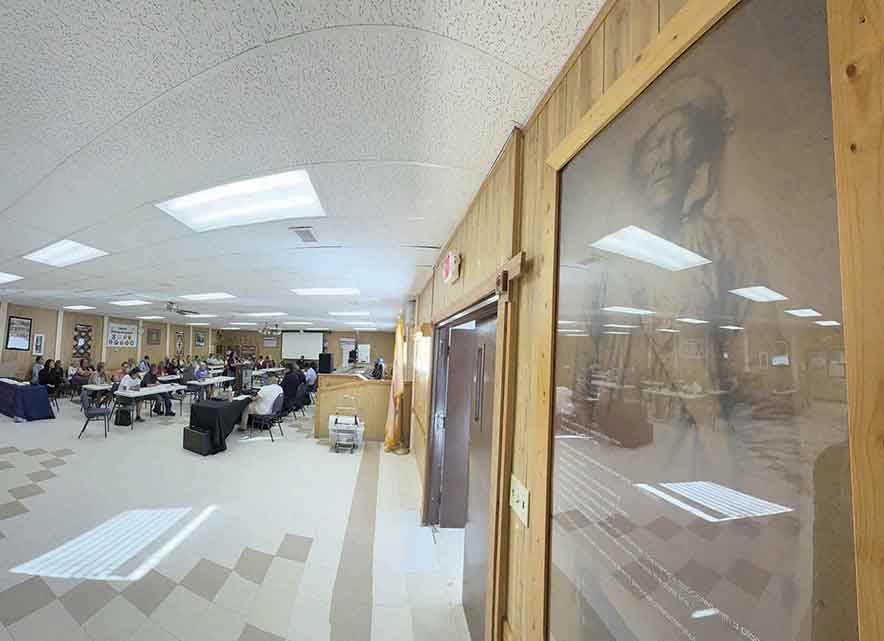
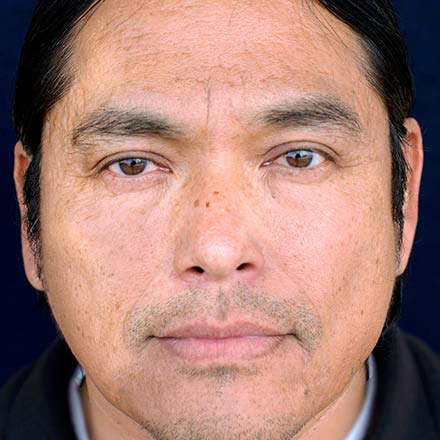
A portrait of Chief Manuelito hangs outside the meeting room as the Navajo Nation Human Rights Commission takes testimony at the Tohatchi Chapter House on Sept. 17.
BÁÁHÁÁLÍ, TOHATCHI, and PUEBLO PINTADO, N.M.
Parents, grandparents, educators and advocates told the Navajo Nation Human Rights Commission in a series of public hearings that Gallup-McKinley County Schools mishandles student discipline, mistreats employees and fails to provide even the most basic resources at rural campuses – conditions they described as discriminatory, inequitable and unsafe.
Special to the Times | Donovan Quintero
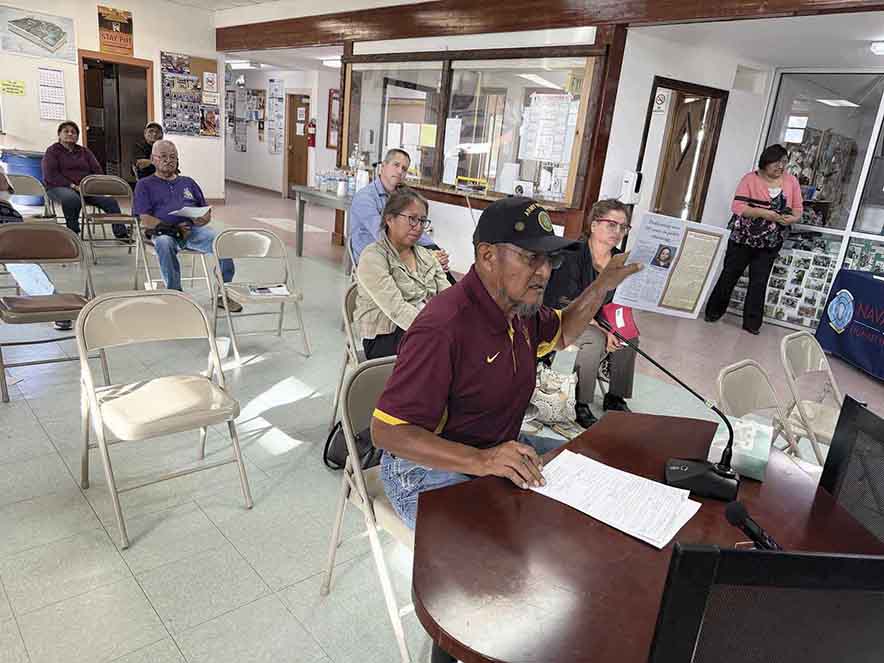
A resident testifies before the Navajo Nation Human Rights Commission at Breadsprings Chapter on Sept. 16 during a hearing on Gallup-McKinley County Schools.
The commission held sessions Sept. 16 at the Breadsprings Chapter, Sept. 17 in Tohatchi and Sept. 24 in Pueblo Pintado to gather testimony from across the district. Commissioners said they chose three separate locations because Gallup-McKinley has become a focal point for federal oversight, statewide education reform and ongoing litigation over equity in Native education. They wanted to ensure families in different communities had the chance to speak on the record about their children’s experiences.
Years of scrutiny, little trust
The hearings followed nearly a decade of state and federal scrutiny. In 2017, the U.S. Department of Education’s Office for Civil Rights and the Department of Justice reached a resolution agreement with Gallup-McKinley after investigators found Native students underrepresented in advanced courses and Navajo- and Zuni-speaking parents inadequately informed about opportunities. The district pledged to expand access and improve outreach.
Special to the Times | Donovan Quintero
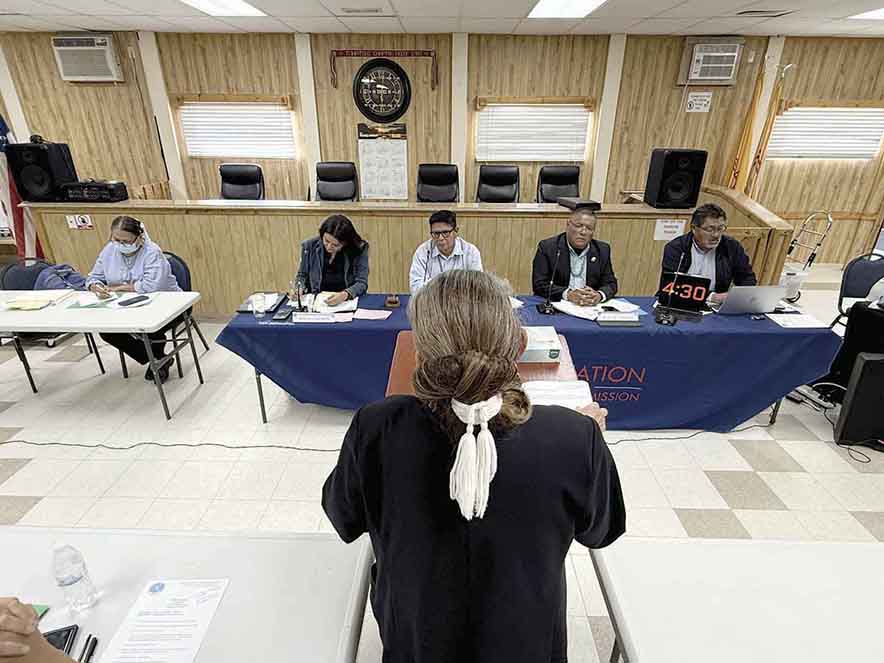
A resident addresses the Navajo Nation Human Rights Commission at the Tohatchi Chapter House on Sept. 17 during hearings on Gallup-McKinley County Schools, where speakers alleged discriminatory, inequitable and unsafe conditions.
A year later, New Mexico’s landmark Yazzie/Martinez ruling found the state had failed to provide sufficient education for Native American, English-language learner, low-income and special needs students. Because Gallup-McKinley serves one of the largest Native student populations in New Mexico, it became a central example of those systemic failings.
In 2024, Equal Employment Opportunity Commission member Andrea Lucas filed a charge accusing the district of intentionally excluding Native Americans from teaching and leadership roles. The district resisted subpoenas, prompting the EEOC to seek enforcement in federal court in 2025. Gallup-McKinley responded with its own lawsuit, arguing the charge was vague and unlawful.
Special to the Times | Donovan Quintero
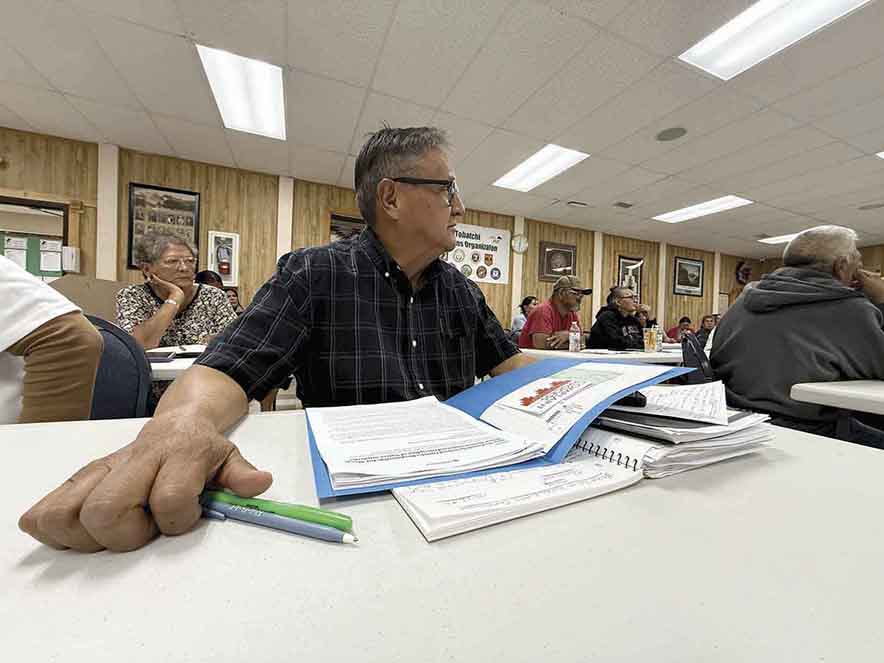
Council Delegate Nathan Notah reviews documents during the Sept. 17 meeting at the Tohatchi Chapter House, where the Human Rights Commission heard testimony on Gallup-McKinley County Schools.
Against this backdrop, the Navajo Nation Human Rights Commission decided to take testimony in three locations to give parents, staff and advocates a platform to describe whether they see progress – or continued inequities.
To read the full article, please see the Sept. 25, 2025, edition of the Navajo Times.
Get instant access to this story by purchasing one of our many e-edition subscriptions HERE at our Navajo Times Store.

 Highway 264,
 I-40, WB @ Winslow