


‘Perfect warriors’ Navajo Code Talkers descendants lead code talker legacy forward
Special to the Times | Donovan Quintero
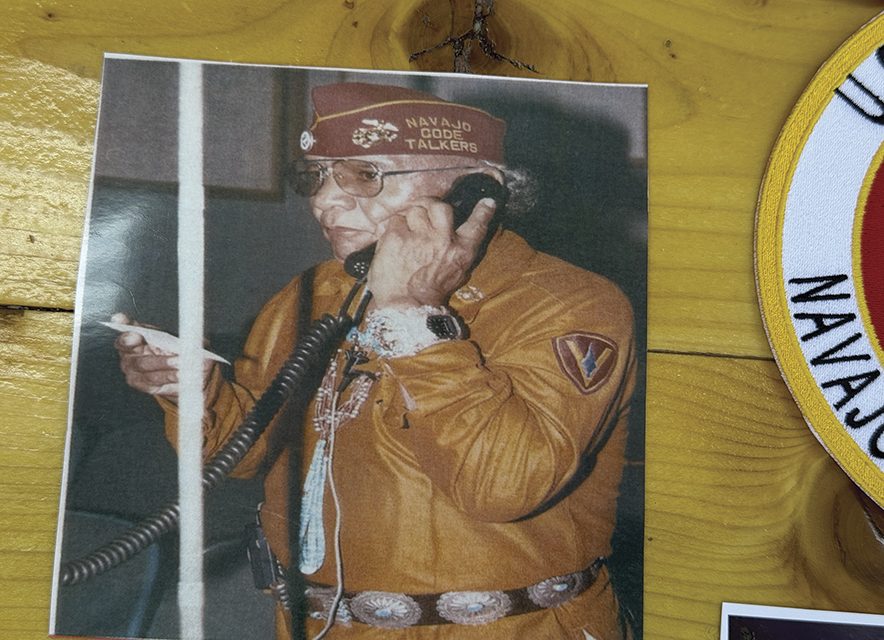
An old photo shows Navajo Code Talker Harold Yazzie Foster Sr. speaking into a phone while referencing a note, dressed in traditional attire with a red Navajo Code Talkers beret and silver concho belt. The elite group of Diné Marines developed an unbreakable code during World War II, playing a critical role in U.S. military communications across the Pacific Theater.
WINDOW ROCK
Larry Foster remembers the story his father told of a brief silence during the Battle of Iwo Jima. Sgt. Harold Yazzie Foster Sr., a Navajo Code Talker, was on the island when the U.S. flag was raised over Mount Suribachi. The moment, Foster said, was marked by something unexpected.
Special to the Times | Donovan Quintero
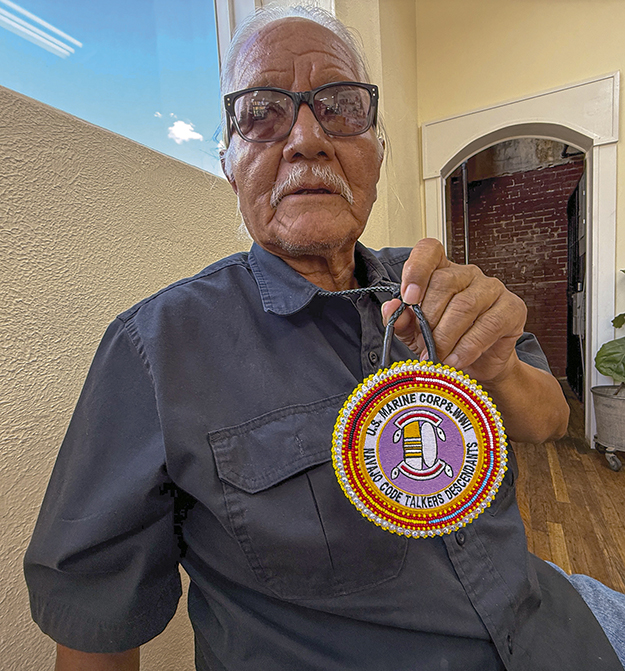
Larry Foster holds a beaded medallion honoring the legacy of the Navajo Code Talkers. Foster, the son of Navajo Code Talker Harold Yazzie Foster Sr., carries forward their story of courage, secrecy and service during World War II.
“There was a message that was sent out with the 27 Marines,” Foster said. “Their message was, ‘Mount Suribachi is secured. Flag is up there.’ Once the flag went up, once the code went up, there was a pause in the war. One second. Nobody shot, nobody got killed. One second. Because people were stunned. The message went up; the flag went up. The radios were all talking Navajo.”
Foster, the second son of Harold Yazzie Foster Sr., said the use of the Navajo language in battle was more than code – it was a form of protection shaped by generations of traditional knowledge.
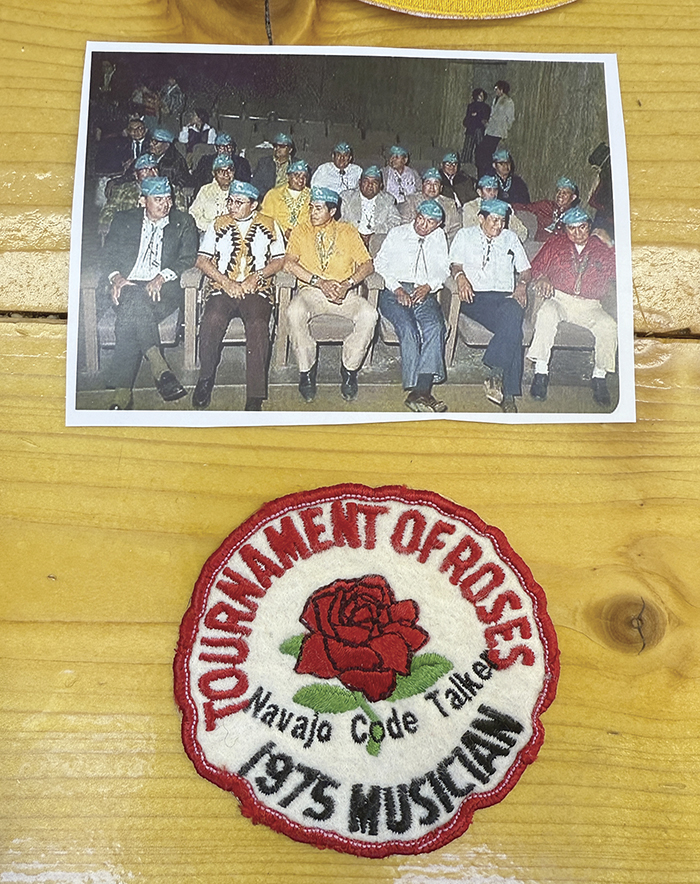
Special to the Times | Donovan Quintero
A vintage photo of Navajo Code Talkers seated together and wearing turquoise headbands is displayed above a commemorative patch from the 1975 Tournament of Roses Parade.
His father was wounded twice, once in the Gilbert Islands and again at Iwo Jima. “There’s a medicine pouch that my father was given,” Larry Foster said. “It’s put together with prayers with medicine from the rattlesnake and the bear. They wore that. That was their protection.”
The medicines, passed down through ceremony, were believed to shield them from harm. “There was tobacco they used. They would smoke and pray in the hogan, and that would make them invisible,” Foster said. “They would go into combat with that mindset.”
To read the full article, please see the Aug. 7, 2025, edition of the Navajo Times.
Get instant access to this story by purchasing one of our many e-edition subscriptions HERE at our Navajo Times Store.

 Highway 264,
 I-40, WB @ Winslow