






New Tribal Nations Maps put Native names
back in classrooms
Courtesy | Aaron Carapella
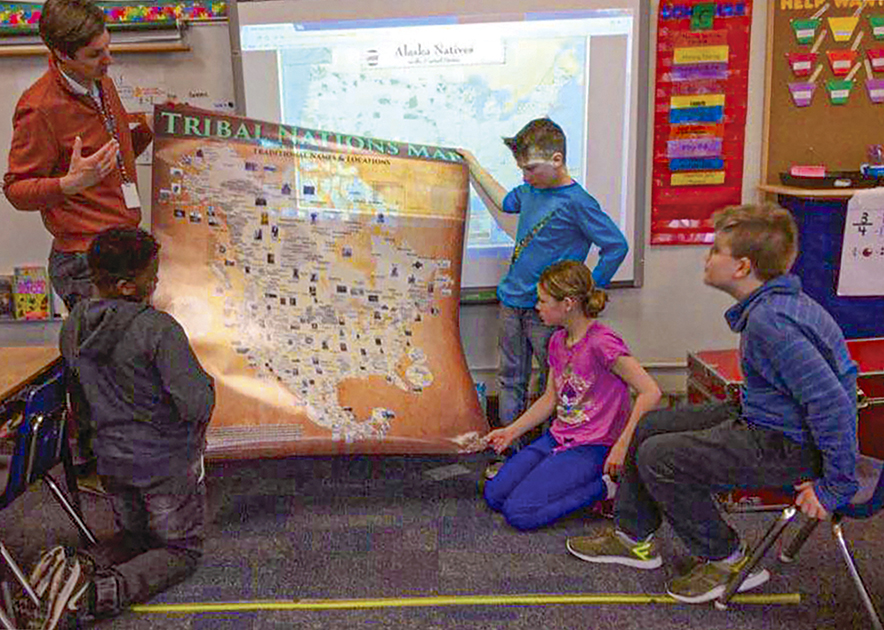
Students and a teacher examine a Tribal Nations Map during a classroom lesson on Native American nations.

ALBUQUERQUE
Cartographer and photogrammetrist Aaron Carapella says his latest releases push Tribal Nations Maps further into contemporary reservation mapping and school-ready materials, building on years of work charting Native American tribes in their original homelands. “In the last few years, I have focused more on current reservation and more contemporary maps, as well as maps that can be used as teaching tools in history or culture units,” he said.
Courtesy | Aaron Carapella
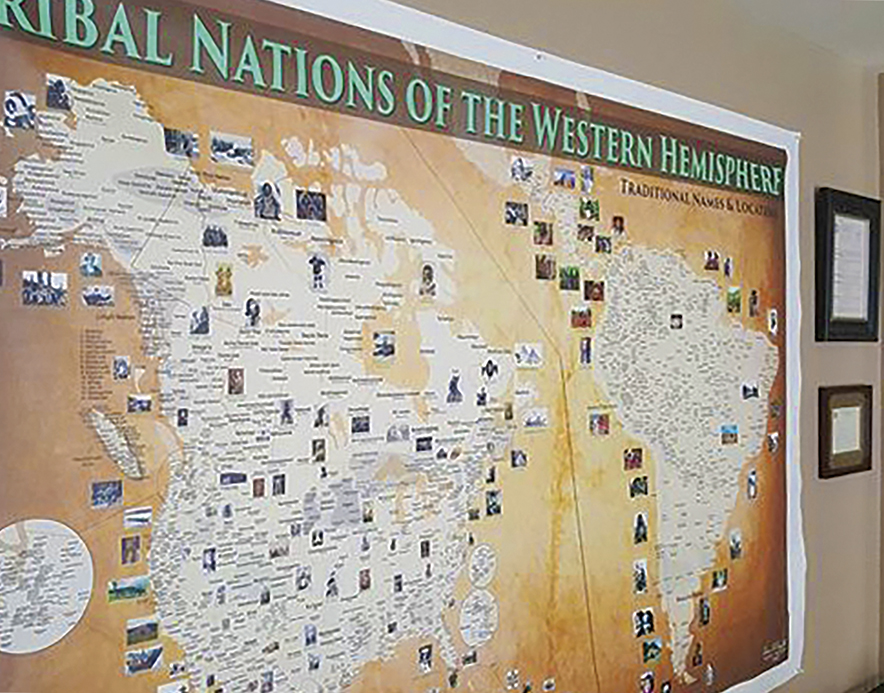
Aaron Carapella’s Tribal Nations Map charts Native American nations and language families using traditional and common names.
Carapella, Cherokee, said the pivot followed a long stretch dedicated to historical homelands across the Western Hemisphere. “It took about seven or eight years to not only complete the mapping of the historic homelands of the entire Western Hemisphere, but also to update it with more Nations, tribes, bands and sub-bands over time,” he said. “I then shifted the focus to mapping reservations of the United States, then Canada and then eventually all of the reserves across the hemisphere.”
Courtesy | Aaron Carapella
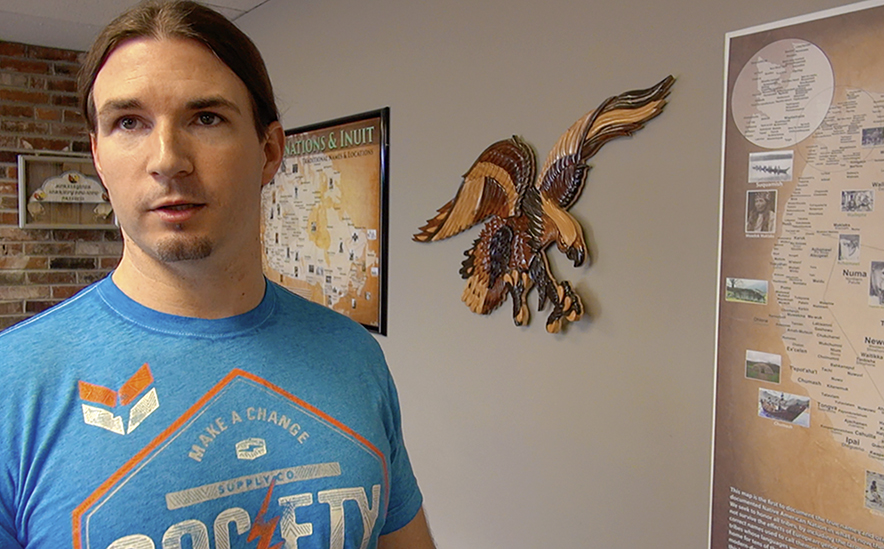
Aaron Carapella, an Oklahoma Cherokee descendant raised in Orange County, Calif., is the cartographer behind the Tribal Nations Maps identifying 4,700 Native American tribes by traditional and common names.
Alongside the reservation series, he has developed targeted historical sets. Carapella’s catalog includes specialized titles such as “Tribal Nations of the Thirteen Colonies” and “Reservations of the Louisiana Purchase.” The purpose of these works is to place Native American presence at the center of the historical record – showing that Native peoples remained on the land, influenced events and held onto what they could through successive eras. He also produces custom maps for tribes, tribal organizations and federal agencies.
To read the full article, please see the Sept. 4, 2025, edition of the Navajo Times.
Get instant access to this story by purchasing one of our many e-edition subscriptions HERE at our Navajo Times Store.

 Highway 264,
 I-40, WB @ Winslow