



Council passes key bills as budget crisis drags on
WINDOW ROCK
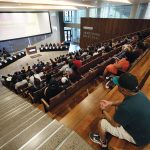
The Council spent six hours Thursday passing emergency legislation, overhauling its procurement code and correcting a redistricting error that threatened voters’ rights, while confronting the fallout from President Buu Nygren’s line-item vetoes of the Legislative Branch’s fiscal 2026 budget.
The vetoes stripped roughly a third of the Council’s operating funds, eliminating travel reimbursements, mileage and delegate stipends. Since then, delegates have paid out of pocket to travel to Window Rock, Legislative staff have worked at reduced capacity, and the Council has been locked in a months-long standoff with the Executive Branch that has produced emergency supplemental appropriations, veto override attempts and a pending resolution seeking the president’s removal.
That conflict surfaced again when Delegate Danny Simpson proposed adding $750,000 for the Office of the President and Vice President to the Council’s own $3.7 million supplemental funding bill in hopes of preventing another veto. What followed was a two-and-a-half-hour procedural fight. The president’s office could not produce required budget documents, the Office of Management and Budget could not confirm it had carried out a prior Council directive, and delegates who had driven hours to attend began leaving for home.
The amendment was ruled out of order. The supplemental was tabled. The Council adjourned at 7:22 p.m. with its own funding still unresolved.
When Nygren exercised line-item veto authority over the fiscal 2026 budget last fall, the cuts fell heavily on the Legislative Branch. In September, the Council responded with a resolution co-sponsored by 14 of its 24 delegates directing the OMB and the Office of the Controller to disregard what it called “unlawful line-item vetoes.” The OMB continued operating under the vetoed figures, and the Council went to court. That challenge to the president’s line-item veto authority remains pending.
Budget crisis hangs over session
The effects of the budget fight were visible throughout the March 19 session. The Council was testing revised Rules of Order for the first time, including a 24-hour amendment posting requirement that consumed hours of debate. Those rules were adopted in response to the budget crisis and were intended, in part, to bring order to a Legislative process strained by reduced staffing.
Delegate Amber Kanazbah Crotty drew that connection during the session’s longest procedural exchange.
“We’re chronically putting stress on our staff and our attorneys to develop on the fly,” Crotty said. “Very reactionary. It causes a great amount of stress, and when there’s errors because we’re all humans and it’s going to happen, it doesn’t give us enough time for more eyes to look on it.”
Simpson, urging compromise with the president, pointed to the burden on delegates.
“I commend my colleagues here, how they’ve been since the beginning. They’ve been utilizing their own funds to travel on behalf of our Navajo people to address their issues,” Simpson explained. “And look at the price of gas now. The average––what? $4.09 per gallon.”
Crotty described the compensation issue in even sharper terms while working from the Council floor on a federal appropriation request tied to abandoned uranium mine cleanup.
“A delegate is doing multitask, and I’m sure there’s someone who gets paid big bucks at Executive who should be doing this, but I defer,” Crotty said. “I’m earning my $42 – here for the whole day.”
New rules get first test
The special session opened with the introduction of Delegate Titus Nez, newly appointed to District 16 after Steven R. Arviso stepped down in January. Speaker Crystalyne Curley acknowledged the Council was operating under unfamiliar procedures.
“Today will be more of like a trial-and-error learning along the way,” Curley said. “So maybe it is ironic that we also have a new delegate. So he’s starting all fresh with new rules of order.”
The new rules shortened amendment debate from five minutes to three, reduced voting windows from two minutes to one, restricted points of privilege to physical chamber conditions and eliminated formal caucus motions. The most significant change was Rule 14E, which requires any amendment not posted electronically at least 24 hours before a bill is considered to receive a two-thirds waiver vote.
Delegate Carl Slater, the vice chair of the Budget and Finance Committee and author of the rule, later acknowledged its ambiguity when it was tested for the first time on the OPVP funding request.
Crotty noted the Council could not even afford to train members on the new procedures.
“There’s no funding for training,” she said. “I could volunteer to do some videos like ‘I’m a Bill.’ You know that PBS, like, ‘This is how you create a bill.’”
The session’s clearest action came early.
Legislation 0029-26, sponsored by Delegate George H. Tolth, appropriated money from the Unreserved, Undesignated Fund Balance for all 110 chapters. Chief Legislative Counsel Michelle Espino said that because the controller classified the appropriation as nonrecurring, budget waivers in the original bill were unnecessary. That lowered the threshold for passage from a two-thirds vote to a simple majority.
After a brief recess, Delegate Vince James proposed an amendment allowing chapters to use the money not only for declared emergencies but also for emergency preparedness. Each of the Navajo Nation’s 110 chapters maintains a designated emergency account known as Fund 17 under the Budget Instruction Manual. Under the original language, chapters could draw on those accounts only after a formal emergency declaration by the president or the Commission on Emergency Management.
James’ amendment added the words “prepare for and,” allowing chapters to spend Fund 17 money on water hauling, livestock feed, fuel, road readiness and emergency planning without waiting for a declaration.
Delegate Cherilyn Yazzie asked whether the BIM supported the change. Espino cited the section of the BIM that already authorizes Fund 17 spending for emergency planning without requiring a declaration.
James’ amendment passed 18-0. Tolth’s legislation, as amended, then passed 19-0, the only unanimous vote of the day.
A second amendment by Delegate Arbin Mitchell to add more than $447,000 for the Office of the Navajo-Hopi Land Commission to fund the Padres Mesa Demonstration Ranch failed 9-10 after debate over the legal status of cattle and property left behind by the shuttered federal Office of Navajo and Hopi Indian Relocation.
OPVP amendment stalls out
The session’s central conflict centered on Legislation 0032-26, a nearly $3.7 million supplemental appropriation to restore nine Legislative Branch programs to their pre-veto funding levels.
Delegate Shaandiin Parrish, the chair of the BFC and the sponsor, told the Council that Nygren had been invited to participate in committee deliberations on the bill but declined.
“He said he would not be there at that meeting,” Parrish said. “The speaker invited him to be here today. He did tell her that he would be here, but I don’t see him in the Chamber at this time.”
Nygren later arrived during debate. Simpson then proposed an amendment to add $750,000 for the OPVP. A standalone version of the same request, Legislation 0026-26, filed Jan. 28 by Delegate Germaine Simonson, had sat in committee for nearly two months without action. Simpson’s strategy was to attach the Executive funding to the Legislative supplemental, creating a package Nygren would be less likely to veto.
“How do we get this legislation signed into law?” Simpson asked. “We’ve been going back and forth since the start of this fiscal year. I’m here to work with both the Legislative Branch and Executive Branch. We have to work together to make this happen.”
Simpson said the president had originally requested $1.5 million but later reduced the request to $750,000. He referred to March 5 and March 9 letters from Nygren indicating he would sign the full supplemental if the $750,000 was included. Nygren briefly addressed the Council in Navajo from the presentation table.
The amendment quickly ran into problems.
Delegate Eugenia Charles-Newton, the chair of the Law and Order Committee, raised the first point of order, arguing the amendment had not been posted 24 hours in advance as required by Rule 14E.
Guided by Espino, Curley embedded waiver language into the amendment, meaning it would require a two-thirds vote to pass rather than a separate preliminary vote to be heard. Crotty appealed that decision.
“We would not add anything to an agenda without the suspension of the floor rules,” Crotty said. “And so we cannot be debating on an issue that right now violates 14E. This amendment should have been posted or else as a body give us the opportunity to take action on this amendment before it’s presented.”
She tied the procedural dispute directly to the budget crisis.
“We are in court as a Council because our budget has been so severely impacted that we are at a critical time when it comes to funding and doing our lawful obligations,” Crotty said. “That’s what this legislation continues to try to fix and remediate.”
Slater acknowledged the lack of clarity in the rule but defended its purpose.
“I accept responsibility and I want to apologize for the lack of clarity in this rule,” Slater said. “I’ve seen so many amendments be put together half-hazardly and us have to deal retroactively with the repercussions of those. The presumption is if you have two-thirds then there is a super majority of the Council that believes that the amendment is necessary, that it is done correctly.”
Delegate Shawna Ann Claw moved to cease debate. The motion carried 15-3. Crotty’s appeal failed 7-11, upholding the speaker’s interpretation. By then, the procedural question had been overtaken by a more basic problem. The documents still had not arrived.
Parrish had requested six categories of documents for the amendment, including shortfall documentation, expenditure rates for the president’s office, the president’s memorandum, the controller’s analysis, budget forms 1 through 5 and an explanation of how a previously enacted Budget Revision Request affected the numbers.
After roughly two hours, none had been fully produced. Controller Sean McCabe, appearing by Zoom, could not provide the expenditure analysis. OMB representative Tanya Tsosie responded by email only that the Budget Revision Request, which the Council had already directed OMB to implement, was “still under review with DOJ.”
A Department of Justice representative was not present.
Parrish focused on the budget forms submitted by the president’s office, which she said was the central flaw because they did not reflect the budget revision the Council had already passed into law.
“How can we debate a future appropriation on something that’s already been passed by this Council?” Parrish asked. “How is our legal counsel enforcing that? Because that’s a law that this Council has passed.”
Espino ruled the amendment out of order, citing the speaker’s authority under Rule 4C to approve documents distributed to the Council and requirements in the BIM for supplemental requests. The budget forms, she said, did not accurately reflect available funding because the Budget Revision Request had not been implemented.
In the end, the president sought $750,000 from the Council, but his office and the agencies under his authority could not produce the paperwork needed to justify it.
After hours of debate, attendance had fallen to 13 delegates, three short of the 16 needed for the legislation’s two-thirds vote requirement. Delegate Otto Tso warned that the body was running out of room to act.
“We could discuss all we want until the evening and when it comes to the main motion if we don’t have two-thirds of the body of the Navajo Nation Council and that’s sixteen, we ain’t going anywhere,” Tso said.
Slater then moved to table the legislation until the next special or regular session. Curley, a co-sponsor, did not object. The motion carried 12-4. Under the new rules, a second tabling would permanently kill the legislation.
The Council’s own operating funds remain unresolved. Delegates will continue paying their own way to Window Rock.
Procurement overhaul clears Council
The session’s most significant long-term action may have been Legislation 0052-26, a complete rewrite of the Navajo Nation Procurement Act.
Parrish introduced it as a substitute for the original bill, Legislation 0235-25, after committee review found the earlier version still contained outdated language from prior years.
The new act, developed over more than a year by the BFC, the controller’s office, the Department of Justice and the Office of Legislative Counsel, reduced the procurement code from 45 pages to 19. It consolidated scattered provisions, aligned language with the Code of Federal Regulations and included a safeguard that it will not take effect until the BFC adopts companion regulations.
“I’ll be honest with you, the version that we amended back in 2023, that was a good attempt at amending the procurement act, but the regulations were never dropped,” Parrish said. “So that’s why there was plenty of confusion and pointing fingers at the Office of the Controller regarding accounts payable. But there was just no clarity.”
Crotty urged government entities to use the law to address service delays.
“Our senior centers are suffering when entities are not allowed to purchase items to keep them open,” she said. “Use this law to keep our senior centers open.”
Claw questioned the checks and balances surrounding DOJ contracts and inconsistencies in the controller’s contract review process.
Parrish’s legislation passed 13-0.
Two other measures, Legislation 0040-26 and 0054-26, passed with little debate.
Legislation 0040-26, sponsored by Slater, moved the primary election date for chapter and general elections to the second-to-last Tuesday in July. It passed 10-5 without floor discussion.
Legislation 0054-26, an emergency correction filed by Crotty the morning of the session, restored two Northern Agency chapters to their correct Legislative districts after an agreed-upon amendment had been inadvertently omitted from a previously approved redistricting plan. With candidate filing opening in April, the error threatened to misassign voters and potential candidates.
“It is impacting their right to vote,” Crotty said. “That’s a fundamental value. I think all of us can agree the role of the government and our citizens have that ultimate right to be able to vote for leaders of their choice.”
The legislation passed 13-0.
The session adjourned with four of six agenda items completed, while the Council’s central problem, its own funding, remained unresolved.
Curley closed by welcoming Nez again.
“Not too bad for a first day,” she told him.
Get instant access to this story by purchasing one of our many e-edition subscriptions HERE at our Navajo Times Store.

 Highway 264,
 I-40, WB @ Winslow