





Diné called to pray for water as drought worsens
Navajo Times | Krista Allen
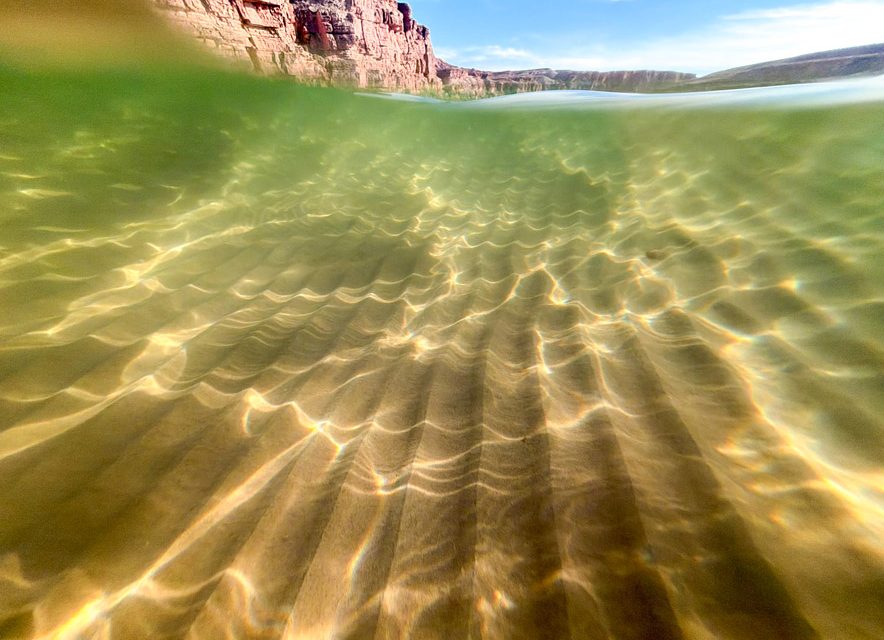
Sunlight ripples across the sandy riverbed beneath the surface of the Colorado River on May 2, 2026, as low spring runoff leaves water levels below seasonal norms.

WINDOW ROCK
The Navajo Nation is being urged to pray for water as the Colorado River Basin enters another dangerous dry stretch.
Federal forecasts warn that Navajo Reservoir could run short of water from November 2026 through February 2027. Lake Powell also could drop toward levels that make it harder to produce hydropower.
Dwight Witherspoon, an attorney with the Navajo Nation Department of Justice Water Rights Unit, said the call for prayer comes from worsening drought and Diné teachings about caring for the land.
Navajo Times | Krista Allen
The Colorado River moves through the Paria Riffle near Paria Beach at Lees Ferry, Ariz., on May 2, 2026, as Lake Powell faces one of its weakest projected spring runoffs on record. Federal projections show inflows at about 22% of average, or roughly 1.4 million acre-feet, with water levels expected to rise only about 12 to 35 feet by July.
Witherspoon said he has been part of regular meetings where federal officials and water experts share updates about Lake Powell, Navajo Reservoir, snowpack, river flows and water operations. Those updates, he said, show serious problems across the Colorado River system.
“We get updates monthly and maybe even semi-monthly here in the last couple of months about the hydrology and the impacts from Lake Powell to Navajo Reservoir,” Witherspoon said.
The U.S. Bureau of Reclamation’s April forecast warned that Navajo Reservoir could reach a critical low point in Water Year 2027, the federal water-tracking period that runs from October 2026 through September 2027. On April 8, the reservoir held about 1.02 million acre-feet of water, or about 62% of what it can hold. An acre-foot is enough water to cover 1 acre of land 1 foot deep.
Reclamation also said much less water than usual is expected to flow into Navajo Reservoir this spring and summer. From April through July, only 173,000 acre-feet is expected – about 28% of normal.
For the full water year, Reclamation expects 598,000 acre-feet, or about 66% of normal. Both forecasts were lower than March estimates.
Navajo Reservoir supplies major water projects, including the Navajo Indian Irrigation Project, which brings water to more than 110,000 acres of farmland used by Navajo Agricultural Products Industry. It also supports the Animas-La Plata Project and the Navajo-Gallup Water Supply Project.
The problem is not limited to one reservoir.
River divided, and overpromised
The Colorado River is divided into two parts. The Upper Basin includes Colorado, New Mexico, Utah and Wyoming. The Lower Basin includes Arizona, California and Nevada.
The 1922 Colorado River Compact divided the river between the two basins. Each basin was promised 7.5 million acre-feet of water per year from the main part of the river. The Lower Basin also received another 1 million acre-feet per year for water taken from the Gila River and its tributaries in Arizona. Mexico receives 1.5 million acre-feet per year under a treaty.
Congress and the courts have also recognized the water rights of 22 of the 30 tribal nations in the basin. Together, those rights total about 3.2 million acre-feet per year.
But the river is producing less water than the old agreements expected.
One of the driest winters on record
Witherspoon said mountains can look snowy to the public while scientific measurements still show a serious shortage.
Special to the Times | Donovan Quintero
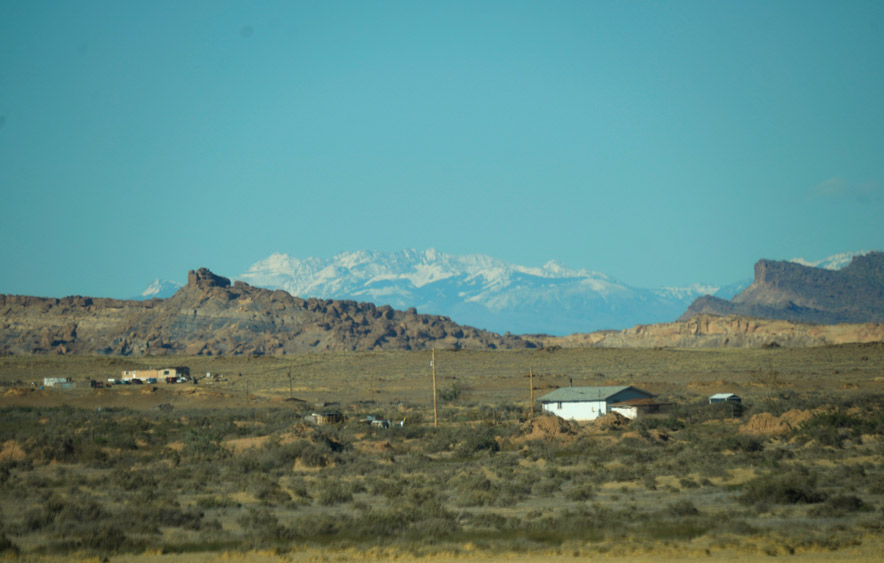
Dibé Ntsaa rises beyond the dry landscape near the Newcomb and Burnham areas on April 4, 2026, as drought continues to strain land, water and livestock in northwestern New Mexico.
“They have a whole bunch of scientific measuring sites all over the various mountains to collect data about how much snowfall,” Witherspoon said. “We really depend upon the snowfall and that snowmelt. It really is what props up or provides water for the river, particularly any of the tributaries in the Colorado River.”
Reclamation reported that snowpack above Lake Powell peaked March 9 at 60% of the seasonal average. By April 16, it had dropped to 22% of normal.
Snow-tracking sites above Navajo Reservoir told the same story. This year’s snowpack peaked Feb. 24 at 9.32 inches of water. A normal peak is 18.33 inches.
The mountains did not hold much snow this winter. Snow acts as a natural water tank, building up in winter and slowly melting in spring and summer to feed rivers, reservoirs, farms, livestock ponds and drinking water systems.
The current shortage is part of a much longer pattern. Researchers at Oregon State University run a weather project called PRISM that uses readings from thousands of weather stations to track rain, snow and temperature. Its records go back to 1895.
PRISM data show the Four Corners has been in a long dry stretch since around 2000. Scientists call it a megadrought. Tree-ring studies suggest this is one of the driest 25-year periods in about 1,200 years.
The winter of 2025-26 was bad even by megadrought standards. Many parts of the Colorado River Basin had their warmest winter on record. In some areas, snowpack was the lowest since at least 1981.
The San Juan River area was hit especially hard. That area collects snowmelt from the Colorado side of the Four Corners and helps feed Lake Powell. By February, snowpack there was 47% of normal. By early April, the Upper Colorado River Basin held only 24% of its normal snow water.
The Colorado River Basin had its hottest March on record, with temperatures 13.7 degrees above normal, according to Drought.gov.
Instead of gaining snow in March, the mountains lost it. Across the West, snow peaked 21 to 34 days earlier than usual, the National Integrated Drought Information System reported.
Warmer winters mean more storms bring rain instead of snow. Rain runs off quickly. Snow stays longer and slowly melts into rivers. The snow that does fall is also melting earlier.
Spring and early summer are usually dry in the Four Corners. Most rain comes during the summer monsoon in July, August and September. If the monsoon is weak this year, dry conditions could last well into fall.
Reservoirs, ditches and stock ponds will have less time to fill. The shortage adds pressure on the Navajo-Gallup Water Supply Project and chapter water-hauling routes.
The National Interagency Fire Center stated that parts of the Four Corners began the warm season with snowpack below 20% of normal. That raises the risk of low river flows, dry pastures and wildfire across the reservation this summer.
Witherspoon said data the tribe had collected all points toward “the worst kind of hydrology for snowpack.”
Lake Powell, Lake Mead and the search for solutions
The danger is especially serious at Lake Powell. Witherspoon said federal officials are worried that water levels could drop too low to protect hydropower equipment at Glen Canyon Dam.
Navajo Times | Krista Allen
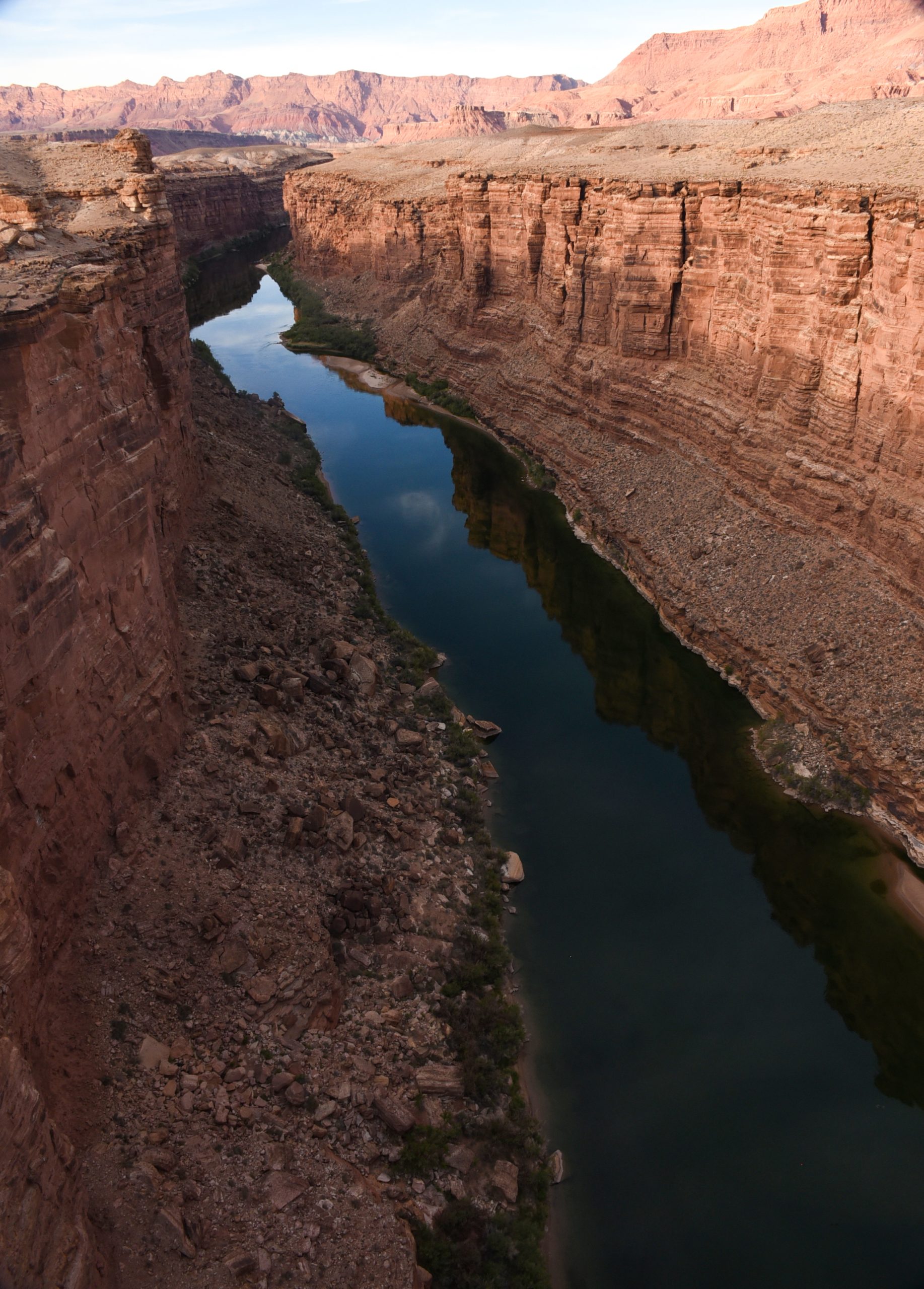
The Colorado River winds through a narrow canyon at River Mile 4 near Marble Canyon, Ariz., in late-day light on May 2, 2026, as a weak spring runoff keeps flows below typical seasonal levels.
Lake Powell was 24% full on April 15. Reclamation projected it could fall further by the end of 2026 before rising again by the end of 2027.
Lake Mead was 32% full. That puts it in a Tier 1 shortage under federal operating rules, which means some states must use less Colorado River water. Arizona is facing a cut of 320,000 acre-feet this year. Nevada faces a cut of 13,000 acre-feet, and Mexico faces a cut of 50,000 acre-feet. Combined cuts and water savings total 613,000 acre-feet this year.
The entire Colorado River system held 21.02 million acre-feet, or 36% of capacity. That was down from 23.61 million acre-feet at the same time last year.
Witherspoon said federal water managers are looking at two major steps to protect Lake Powell.
“They’re looking at releasing water from Flaming Gorge, somewhere about 600,000 to up to 1 million acre-feet, to try to prop up the level at Lake Powell so that it protects the infrastructure and allows for generation,” Witherspoon said. “The other is they’re initiating something called 6e Protocol, which allows for them to reduce the amount that they release from Lake Powell down to a minimum of what’s called 6 million acre-feet.”
The 6 million acre-feet figure refers to the minimum annual release from Lake Powell to the Lower Basin. Standard releases have historically been higher.
He said those steps show how serious the shortage has become.
Witherspoon said the Colorado River provides water for about 40 million people. Witherspoon said the Colorado River provides water for about 40 million people. But the compact divided more water than the river now produces.
“In the last 20, 25 years, since 2000, the average has been closer to 12.5 to 13 million acre-feet,” Witherspoon said. “So the water’s over appropriated.”
That gap is now showing up in reservoirs, water operations and political negotiations. With Lake Powell hovering near a quarter of capacity, the basin has less backup water to get through dry years.
“You don’t have kind of the reserve anymore,” he said.
The shortage could eventually affect Navajo homes through electricity costs. Witherspoon said many tribes receive energy connected to hydropower from Glen Canyon Dam. The Navajo Tribal Utility Authority, he said, receives a significant amount of lower-cost power through that system.
“If you can’t generate power, then they have to go out and purchase power,” Witherspoon said. “And that makes certainly power more costly.”
Witherspoon said the Nation already uses water, but much of that historic use has depended on groundwater. The Nation has secured water settlements on the San Juan River in New Mexico and Utah, and surface water projects are moving forward.
The Navajo-Gallup Water Supply Project remains one of the largest. By 2029, San Juan River water is expected to reach 43 Navajo chapters, Gallup and the Jicarilla Apache Nation.
He said the Nation is also trying to move surface water to communities in Utah. But those projects take time.
“Water projects are large regional projects,” Witherspoon said. “They’re like a decade in the making.”
The current drought does not erase the Navajo Nation’s water rights, Witherspoon said. But it makes settlement talks harder, especially in Arizona.
He said the Nation needs support from all seven Colorado River Basin states to move settlement legislation through Congress. A similar agreement helped move the San Juan settlement forward.
Arizona negotiations have stalled because the Upper Basin and Lower Basin have not agreed on future river rules. Current operating rules expire in 2026, Witherspoon said.
He said the Navajo Nation has proposed putting some water in Lake Powell and having the Bureau of Reclamation pay the Nation for that water for up to 20 years. He said the proposal would help the whole basin by supporting Lake Powell.
But he said basin states remain concerned about how that water would be released.
“They’re concerned about the rules of how that water will be released,” Witherspoon said. “Because they haven’t been able to come to an agreement between the Upper Basin and the Lower Basin, we’re kind of caught between the two to try to finalize the settlement and get a consensus agreement so we can move it forward in Congress.”
Reclamation said it will release only the minimum amount needed from Navajo Reservoir to meet downstream needs. It also will work with the U.S. Fish and Wildlife Service to possibly lower river-flow targets below the dam for a short time.
Tsodizin, call to pray for water
That uncertainty is the backdrop for the Navajo Nation water prayer campaign, which runs from May 1 through May 31. The proposal calls on the Diné, from elders to children, to pray at 6 a.m. and 9 p.m. each day for moisture. It also asks other tribal leaders to start similar campaigns with their own nations.
Navajo Times | Krista Allen
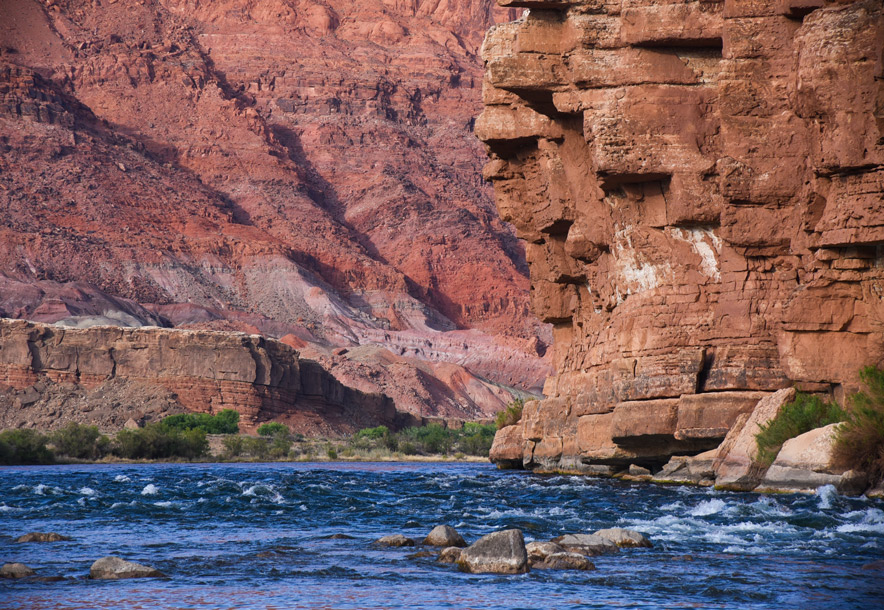
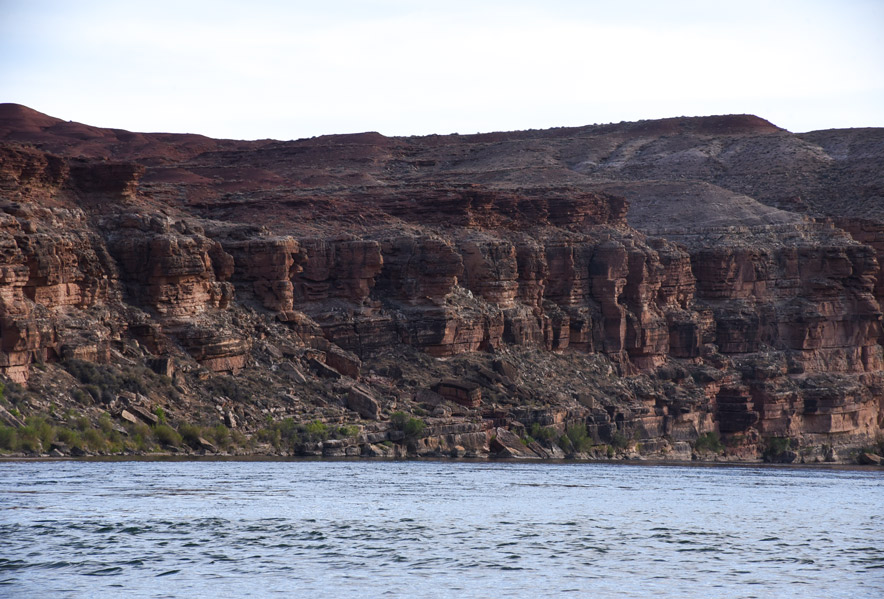
The Moenkopi Formation rises above the Colorado River near River Mile 2 at Lees Ferry, Ariz., on May 2, 2026, as low projected spring runoff leaves flows below seasonal averages.
The proposal states that the Southwest’s water supply has become critical because there has not been enough snow to feed “lifegiving rivers and waterways.” It calls on Indigenous nations and people, as caretakers of the land, to take spiritual leadership through prayers, ceremonies and songs asking Creator and Mother Earth for snow, rain and water.
Witherspoon said he suggested 6 a.m. and 9 p.m. so people across the Nation could join at the same time.
“It could be on anybody’s timeline, but I suggest that it be at 6 a.m. and 9 p.m. so that we collectively are putting forth voice to Creator to ask for that kind of blessing,” Witherspoon said.
The proposal centers the Diné teaching that “Tó éí iiná át’é.” It references Tóyiisdzáán, and notes that Diné creation stories include male and female rivers. Sacred mountains, including the San Francisco Peaks and Mount Hesperus, are tied to sacred waters and rivers, including the Colorado River.
The proposal states that water is fundamental to Hózhó, the Navajo way of life, and is needed for people, crops, animals and sustainable living. It calls on people to pray to sacred waters, use tádídíín and make offerings so rivers, crops, animals, land and people can grow and thrive.
Witherspoon said the call is not only about reservoirs and forecasts. It is also about responsibility.
“Navajos, as well as other tribal nations, are stewards of their lands,” Witherspoon said. “It’s making a call for us to pray for snow and for rain, to be good stewards of the land and to use the spiritual responsibilities that we have to the land.”
He said prayers are being asked for groundwater, aquifers, streams, ponds and rivers to recharge. Prayers are also being asked for trees, grass, insects, four-legged relatives, two-legged relatives, winged relatives and fish.
Witherspoon said the Nation’s call for prayer is meant to bring people together as the basin faces one of its driest periods in recorded history.
“Water is an element of life,” he said, “and it’s required for life.”
Get instant access to this story by purchasing one of our many e-edition subscriptions HERE at our Navajo Times Store.
 Highway 264,
 I-40, WB @ Winslow