





Historic floods bring water, but no end to drought, Tulley-Cordova says
Navajo Times | Krista Allen
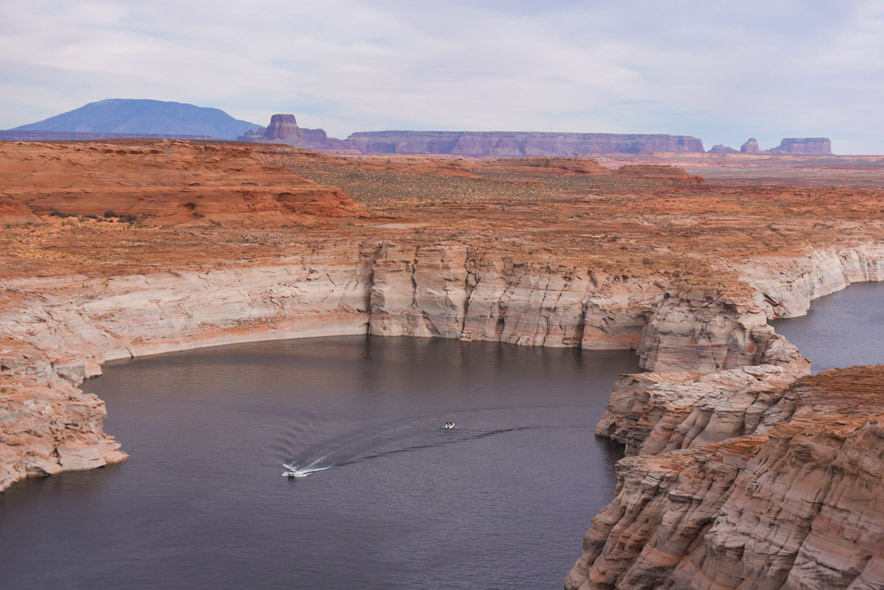
Boats travel between sandstone cliffs on Lake Powell. Bureau of Reclamation officials recorded a rise of more than 20 feet between Oct. 10 and Nov. 10, 2026.

WINDOW ROCK
The floodwater that tore through Shiprock, Aneth and other San Juan River communities in October did some good on its way downstream. It raised Navajo Reservoir more than 40 feet and lifted Lake Powell off its record low.

Navajo Times | Krista Allen
The Colorado River winds between sandstone cliffs at Horseshoe Bend near Page, Ariz. Upstream, Bureau of Reclamation officials recorded a rise of more than 20 feet in Lake Powell between Oct. 10 and Nov. 10, 2026.
But the storms did not end the drought, according to Crystal Tulley-Cordova, a principal hydrologist with the Navajo Nation Department of Water Resources. The Nation can experience flooding and drought at the same time. Lasting relief depends on winter snowpack, while decisions about water rights and infrastructure will fall to the incoming Navajo Nation president and Council.
Lake Powell hit its lowest level on record, 3,516.62 feet, Sept. 15. By Nov. 10, it had climbed 22.68 feet to 3,539.30 feet. Despite the increase, the reservoir remained only about a quarter full.
Much of that gain came from the San Juan River. Rainfall associated with the remnants of Hurricane Trudy contributed to flooding in the San Juan, Animas, Piedra and Dolores river basins, which drain into Powell. From Oct. 21 to 28, the lake took in more than 500,000 acre-feet.
To read the full article, please see the Nov. 12, 2026, edition of the Navajo Times.
Readers can support Navajo Times journalism with an e-Edition subscription, available through our Navajo Times Store.
 Highway 264,
 I-40, WB @ Winslow
