


Paul Natonabah, longtime Navajo Times photographer, dies at 82
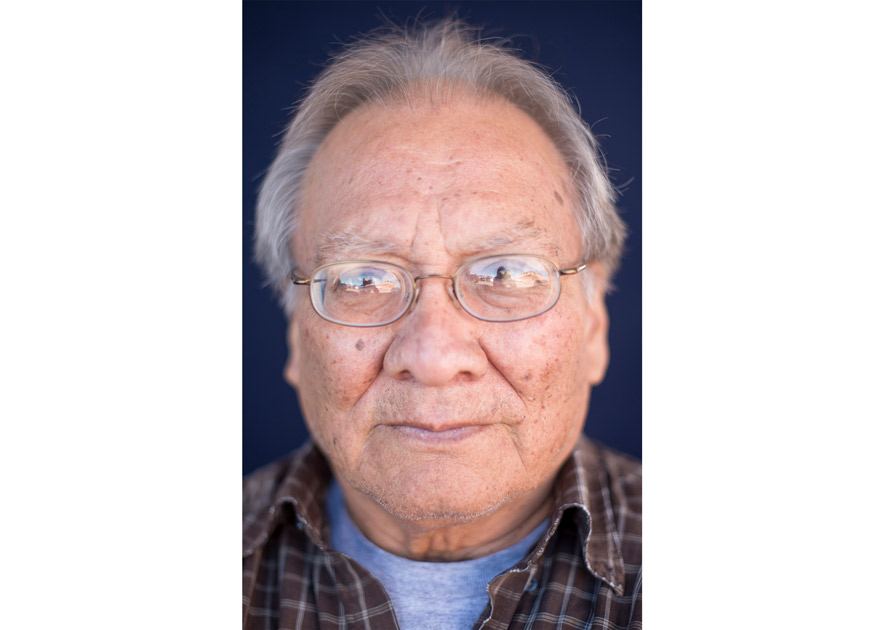
Longtime Navajo Times photographer Paul Natonabah poses for a portrait outside the Navajo Times office in Window Rock. Natonabah, whose work documented more than four decades of Diné life and history, died Saturday, July 25. He was 82.

DÁ’DEESTŁ’IN HÓTSAA
Paul Natonabah, whose photographs documented more than four decades of Diné history for the Navajo Times, died Saturday, July 25. He was 82.
Natonabah, who was born June 7, 1944, became one of the newspaper’s most recognizable staff members through assignments that took him from government hearings and breaking news to basketball gyms, football fields, rodeo arenas and chapter communities.
Then-Managing Editor Chet MacRorie hired Natonabah as a photographer and writer in 1971. His first front-page article, published that Thanksgiving, covered the election of Leon F. Cook as president of the National Congress of American Indians.
Navajo Times | Paul Natonabah
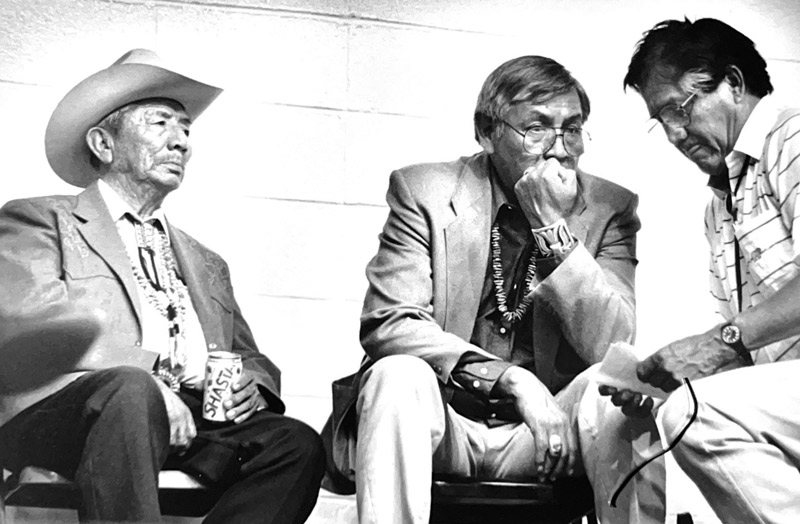
Navajo Nation President Peterson Zah listens to Jack Jackson, moderator of Diné Culture and Society Organization meeting at Window Rock Civic Center in this 1993 photograph. Seated left is Nevi Jensen, a traditional Navajo medicine man. Zah spoke to the people later.
Natonabah briefly served as acting editor in 1976 after MacRorie left the newspaper. He later became the Times’ photo editor and retired from that position in 2013 after more than 40 years with the newspaper.
Former Navajo Times CEO and Publisher Tom Arviso Jr. said Natonabah continued working with the newspaper until about 2020, when the COVID-19 pandemic began. Natonabah was seen less frequently at the Navajo Times office after that, Arviso said.
“Paul was a friend and mentor to many of us at the Navajo Times. He was quiet, kind and he had a warm friendly smile, and he would always point with his lips,” Arviso said. “We covered a lot of events, games, rodeos, tribal Council and chapter gatherings. People from all across Navajoland knew and recognized Paul. When we showed up at an event or game, people would gather around him and joke and laugh.”
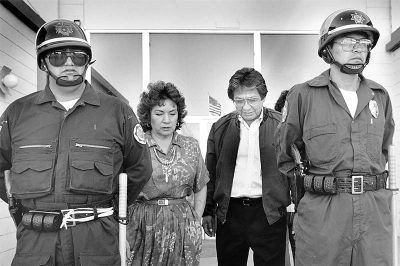
Natonabah’s career covered some of the most consequential periods in modern Navajo government. He photographed hearings involving Peter MacDonald Sr. and captured an image of MacDonald leaving one hearing with his wife, Wanda, under police guard. The photograph continued to appear in the Navajo Times years later as the newspaper revisited that period.
Navajo Times | Paul Natonabah
Chairman Peter MacDonald walks away from one of his hearings with his wife, Wanda, guarded by Navajo Nation police.
He also photographed Russell Means attempting to make a citizen’s arrest of Bureau of Indian Affairs Navajo Area Director James Stevens in Window Rock in July 1989. The image showed Means putting Stevens in a headlock as two BIA officers intervened.
Natonabah’s work extended well beyond politics. He photographed Navajo Nation fairs, rodeos, high school sports, graduations, public demonstrations and everyday life in Diné communities.
His ability to speak Diné Bizaad and his knowledge of Diné culture shaped the way he worked with the people he photographed, Arviso said.
“Paul spoke fluent Navajo and was respectful of Navajo culture and tradition. That was one of his strengths,” Arviso said. “He recorded so much tribal history throughout the five decades that he took photos. I believe that Paul’s best photos were his black and white ones. He had his dark room at the Times office, and it was there that he created some of his best photographs.”
His photographs became familiar to generations of readers and the thousands of people he encountered while traveling for assignments. A Navajo Times account of his career described him as the face of the newspaper to many Diné.
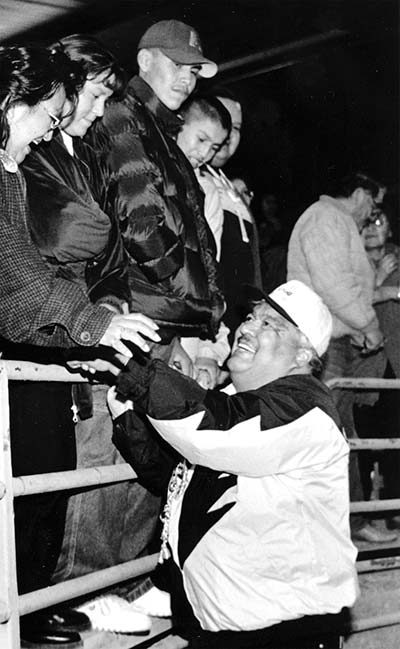
Navajo Times | Paul Natonabah
Kelsey Begaye of Kaibeto, Ariz., rose from a life on the streets to become Navajo Nation president.
His work repeatedly received state and national journalism awards. In 2012, Natonabah won first place for best feature photo and best news photo in the Native American Journalists Association competition. He also shared first place for best sports photo.
His awards continued after his retirement. “Shot Block” received an honorable mention in community sports photography in the Arizona Press Club’s 2017 contest. The following year, “Little Drummer Boy” received top feature photography honors from the Arizona Newspapers Association.
Natonabah’s career spanned the film and digital eras, the Navajo Times’ years as both a weekly and daily newspaper and its transition from a publication overseen by the Navajo government to an independent publishing company.
He worked during the Navajo Times TODAY period, when the newspaper began publishing five days a week March 21, 1984. The daily newspaper was shut down Feb. 19, 1987, and later returned as a weekly.
According to a Navajo Times retrospective, Natonabah’s collection of photographs from the 1970s and 1980s disappeared when the newspaper was closed in 1987. Photographs that survived remained part of the newspaper’s visual record and continued to be published decades later.
One assignment carried Natonabah’s work far beyond the Navajo Nation.
After a U.S. Air Force B-52 crashed near Kayenta during the Navajo Times TODAY era, Natonabah traveled to the site with editor Mark Trahant and printer Leonard Sylvan. Trahant instructed Natonabah to photograph the wreckage quickly and hand over the film.
Trahant concealed the film in the hood of his jacket before FBI agents arrived. The agents temporarily confiscated Natonabah’s camera, but Trahant retained the film.
The photograph appeared the next day on the front page of The Arizona Republic and was distributed to newspapers worldwide through The Associated Press and United Press International.
“Every image was credited to Natonabah and the Navajo Times,” Trahant later wrote. “On that day, the Navajo Times Today was the best newspaper in the country.”
According to information provided by Natonabah’s family, a rosary will begin at 3 p.m. Thursday, July 30, at Rollie Mortuary in Gallup.
The funeral will begin at 10 a.m. Friday, July 31, at the mortuary. Burial will follow at a private family plot east of Tohatchi, New Mexico.
A reception will take place afterward at Natonabah’s family home. Directions to the burial site and family home will be provided at the funeral.
The family is accepting financial assistance and donations toward funeral expenses through Rollie Mortuary.
“Paul is a true Diné legend and icon and we were all blessed to have shared some quality time with him,” Arviso said.
Get instant access to this story by purchasing one of our many e-edition subscriptions HERE at our Navajo Times Store.

 Highway 264,
 I-40, WB @ Winslow