




The drought no one sees
Navajo Times | Krista Allen
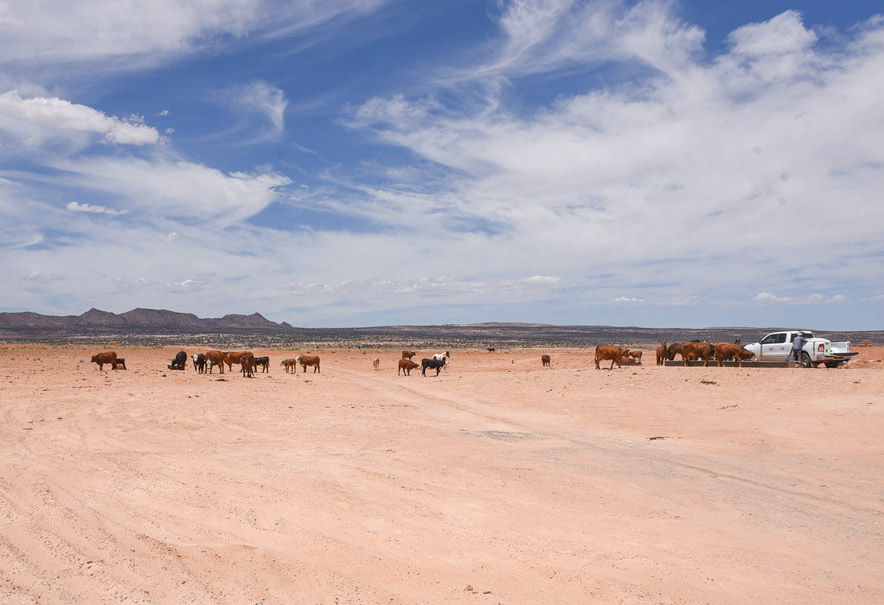
A rancher gets water at the 1A-115 Windmill in Bodaway-Gap, Ariz., on June 12 as cattle gather nearby. President Buu Nygren declared a drought emergency for the Navajo Nation on June 10, 2026, amid worsening dry conditions.

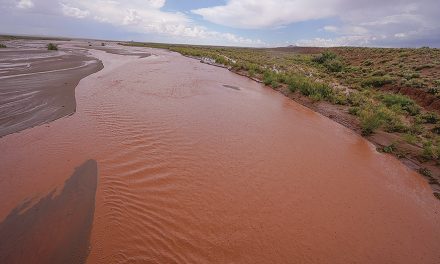
A weak snowpack, shrinking ponds and rising fire danger mark a slow disaster on the Navajo Nation
WINDOW ROCK
A tornado announces itself. A flood, an earthquake, a wildfire, each leaves a wound a person can point to. Drought does none of that. It arrives without a sound and takes its time, and on the Navajo Nation it has been taking its time for the better part of 25 years.
The signs are there for anyone who reads the land.
At Padres Mesa Ranch in Chambers, Arizona, elk break from the piñon and juniper and run single file over pale, overgrazed ground, hooves throwing up a low wall of dust where grass should be. At the edge of a shrinking stock pond in Tohatchi, New Mexico, a lone clump of grass clings to cracked, salt-whitened mud, the dark water pulled back from banks that were green a year ago. In Shonto, Arizona, a mare and her foal stand nose to nose in bleached grass beneath mesas whose lower slopes are stippled brown with stressed piñon and juniper. None of it is dramatic. All of it is the disaster, advancing.
The trouble with drought, the people who study it say, is that most of us are built not to notice it. Robert D. Ramsey, a professor at Utah State University, said the difference comes down to who is paying attention and why.
“If it’s not touching you right now, you’re probably not going to realize it,” said Ramsey.
A rancher or a farmer reads drought the moment it begins, Ramsey said, because their living depends on it, the grass that does not green up, the crop that needs water it is not getting. A land manager can pick out a dry year almost immediately.
To read the full article, please see the June 18, 2026, edition of the Navajo Times.
Get instant access to this story by purchasing one of our many e-edition subscriptions HERE at our Navajo Times Store.

 Highway 264,
 I-40, WB @ Winslow